
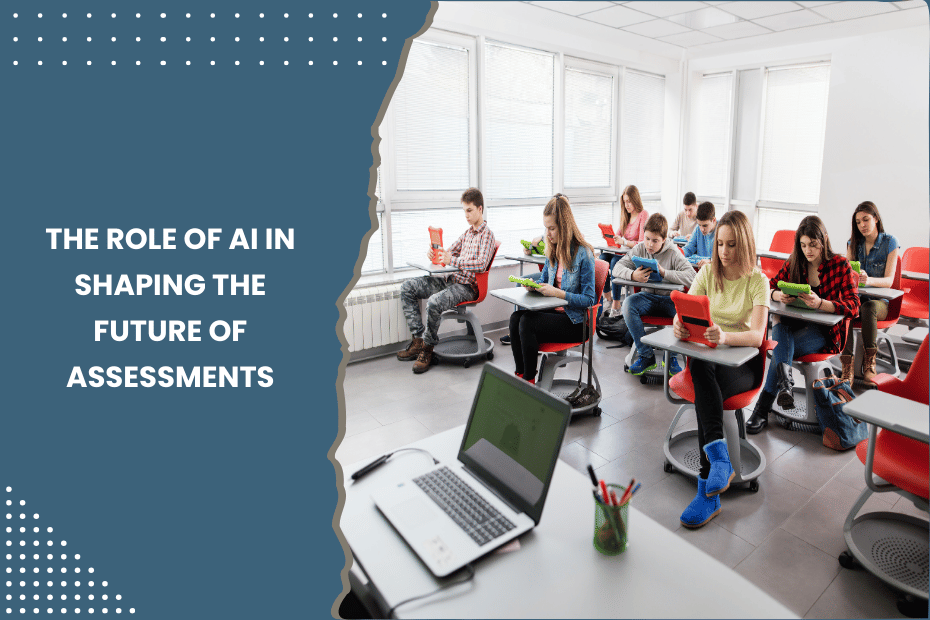
Artificial intelligence (AI) is no longer just a futuristic concept; it’s a technology that is transforming how we teach, learn, and evaluate. Assessments, in particular, are undergoing a significant evolution due to AI-driven tools that enhance accuracy, reduce biases, and provide real-time feedback. The traditional model of one-size-fits-all exams is being replaced by more personalized, adaptive assessments that offer meaningful insights into a student’s progress. In this article, I’ll discuss how AI is shaping the future of assessments and the benefits, challenges, and opportunities this brings to the world of education.
Automated Grading: Faster and Fairer Evaluations
One of the most visible impacts of AI in assessments is the introduction of automated grading systems. These tools can quickly and accurately assess multiple-choice questions, essays, and even complex assignments. Unlike human graders, AI doesn’t tire or bring personal bias into the process. Instead, it evaluates based on consistent criteria, which means students are judged fairly across the board.
Automated grading also frees up valuable time for educators, allowing them to focus on more critical tasks such as lesson planning and personalized student support. While AI-driven tools handle routine evaluations, teachers can dedicate more time to fostering creativity and critical thinking, areas that require human judgment and empathy.
Personalized Assessments for Every Student
AI’s ability to analyze large volumes of data makes personalized assessments possible. Rather than giving every student the same test, AI-powered platforms can adapt the difficulty and content of questions in real time, based on each student’s performance. This approach ensures that students aren’t discouraged by overly difficult tasks or bored by content they’ve already mastered.
Personalized assessments are especially valuable in mixed-ability classrooms, where students may be at different levels in their learning journeys. By providing tailored challenges and support, AI helps bridge gaps in understanding, ensuring that all learners have the opportunity to succeed.
Reducing Bias in the Evaluation Process
Human bias in assessments—whether conscious or unconscious—has long been a concern in education. Factors such as a student’s handwriting, prior performance, or even cultural background can influence a grader’s perception of their work. AI offers a solution by providing objective evaluations based solely on predetermined criteria.
While AI isn’t perfect, it significantly reduces the subjective elements that can creep into human grading. By standardizing evaluations, it helps create a fairer playing field for all students, regardless of their background or personal characteristics. Of course, ongoing calibration and oversight are necessary to ensure that AI systems continue to deliver unbiased results.
Real-Time Feedback for Continuous Improvement
One of AI’s greatest strengths is its ability to provide instant feedback. Traditional assessments often involve a delay between when a student submits their work and when they receive feedback, which can hinder the learning process. With AI-powered systems, students receive immediate responses, allowing them to understand and correct their mistakes while the material is still fresh in their minds.
This kind of real-time feedback fosters a growth mindset. Instead of viewing mistakes as failures, students see them as opportunities to learn and improve. By promoting this approach, AI helps create a more positive learning environment where students are encouraged to take risks and explore new ideas.
Enhancing Formative and Summative Assessments
AI is making both formative and summative assessments more effective. In formative assessments, which are designed to guide learning, AI tools can track student progress over time and identify areas where additional support is needed. This data-driven approach enables teachers to intervene early and provide targeted help, preventing small issues from becoming major obstacles.
In summative assessments, which evaluate a student’s overall understanding at the end of a course, AI can improve efficiency and consistency. By automating the evaluation process, it ensures that results are delivered quickly and fairly, reducing the stress and uncertainty that often accompany final exams.
Adaptive Testing: A More Accurate Measure of Ability
Adaptive testing is another significant advancement made possible by AI. In traditional exams, every student receives the same set of questions, regardless of their ability level. This can result in skewed outcomes, as some students may find the test too easy, while others may find it too difficult.
AI-driven adaptive tests, on the other hand, adjust the difficulty of questions in real time based on a student’s responses. If a student answers correctly, the next question becomes slightly harder; if they answer incorrectly, the system presents an easier question. This approach provides a more accurate measure of a student’s true abilities and ensures that assessments remain engaging and appropriately challenging.
Preparing Students for a Technology-Driven World
As AI continues to play a larger role in education, it’s essential to prepare students for its integration into their learning environment. This includes teaching them how to use AI tools responsibly and understand their limitations. Educators have a crucial role in guiding students on how to incorporate AI into their study routines without becoming overly reliant on it.
Moreover, transparency is key. Students should understand how AI-powered assessments work, what criteria are being used to evaluate their performance, and how they can improve based on the feedback provided. This level of clarity builds trust in the technology and ensures that students see AI as a helpful tool rather than a mysterious black box.
Key Points for Google Featured Snippets
- Automated Grading: Speeds up evaluation while reducing human bias.
- Personalized Assessments: Tailored tests improve engagement and outcomes.
- Real-Time Feedback: Immediate insights help students correct mistakes quickly.
- Reducing Bias: Objective evaluation ensures fair grading for all learners.
- Adaptive Testing: Adjusts question difficulty in real time for accurate assessment.
In Conclusion
AI is revolutionizing educational assessments by automating grading, delivering personalized and adaptive tests, reducing bias, and offering real-time feedback that enhances learning. These advancements not only improve the efficiency and fairness of evaluations but also create more engaging learning environments. While AI offers significant benefits, it should serve as a tool to support—not replace—the vital role of educators. By using AI thoughtfully, we can build an assessment system that promotes both academic excellence and personal growth, ensuring students are well-prepared for a technology-driven future.